.svg)


Pope Leo XIV's first encyclical, Magnifica Humanitas, is dated May 15, 2026 and was presented on May 25. The Vatican published the full text and the pope's presentation, providing a direct basis for assessing its themes.
The argument in context
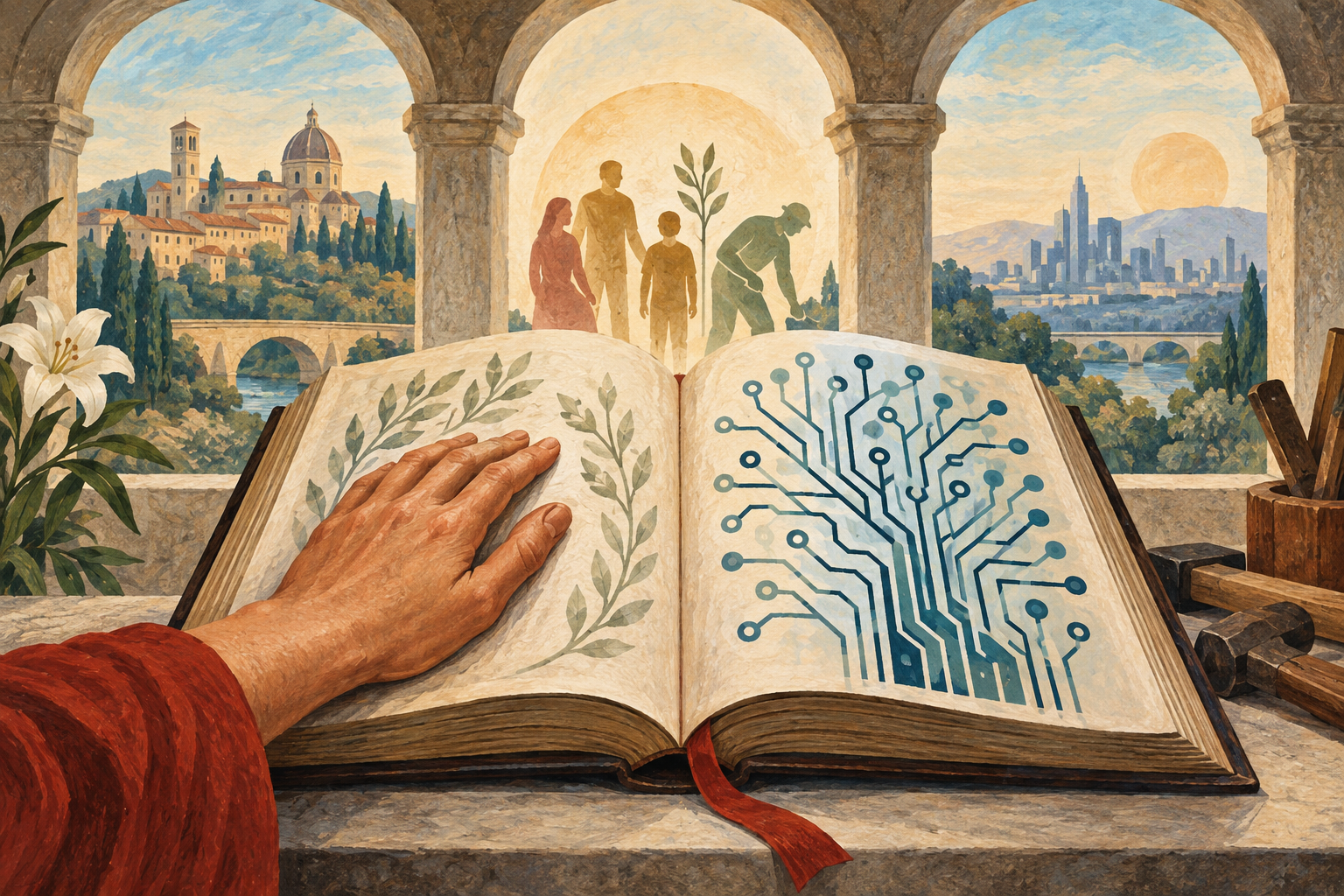
The letter places the human person at the center of economic and technological change. It addresses artificial intelligence alongside broader questions about work, social relationships and responsibility. Its reference to the Catholic social tradition connects contemporary change with earlier debates over industrial society.
The date also marks 135 years since Leo XIII's Rerum Novarum, the 1891 encyclical on the condition of workers. That connection helps explain the letter's interest in the effects of technology on people's lives.
Read beyond a political label
Describing the pope as “woke” or presenting an online slogan as the document's central message substitutes a partisan label for the text. More useful questions concern the duties the letter proposes and how its account of human dignity applies to technological systems.
The encyclical is a religious and ethical contribution, not a technical standard or national AI law. Claims about its political reception or popularity online need separate evidence.
Turn an ethical theme into a reading question
Choose a passage about work or technology and ask who bears responsibility and whose interests it puts first. Then separate that ethical argument from a claim about what a particular AI system can do. The two questions require different kinds of evidence.
Sources and further reading
- Vatican: Full text of Magnifica Humanitas
Primary source - Vatican: Presentation, 25 May 2026
Primary source
A JournoPulse blog post, prepared with AI assistance from the linked sources. Our methodology · Suggest a correction.