.svg)


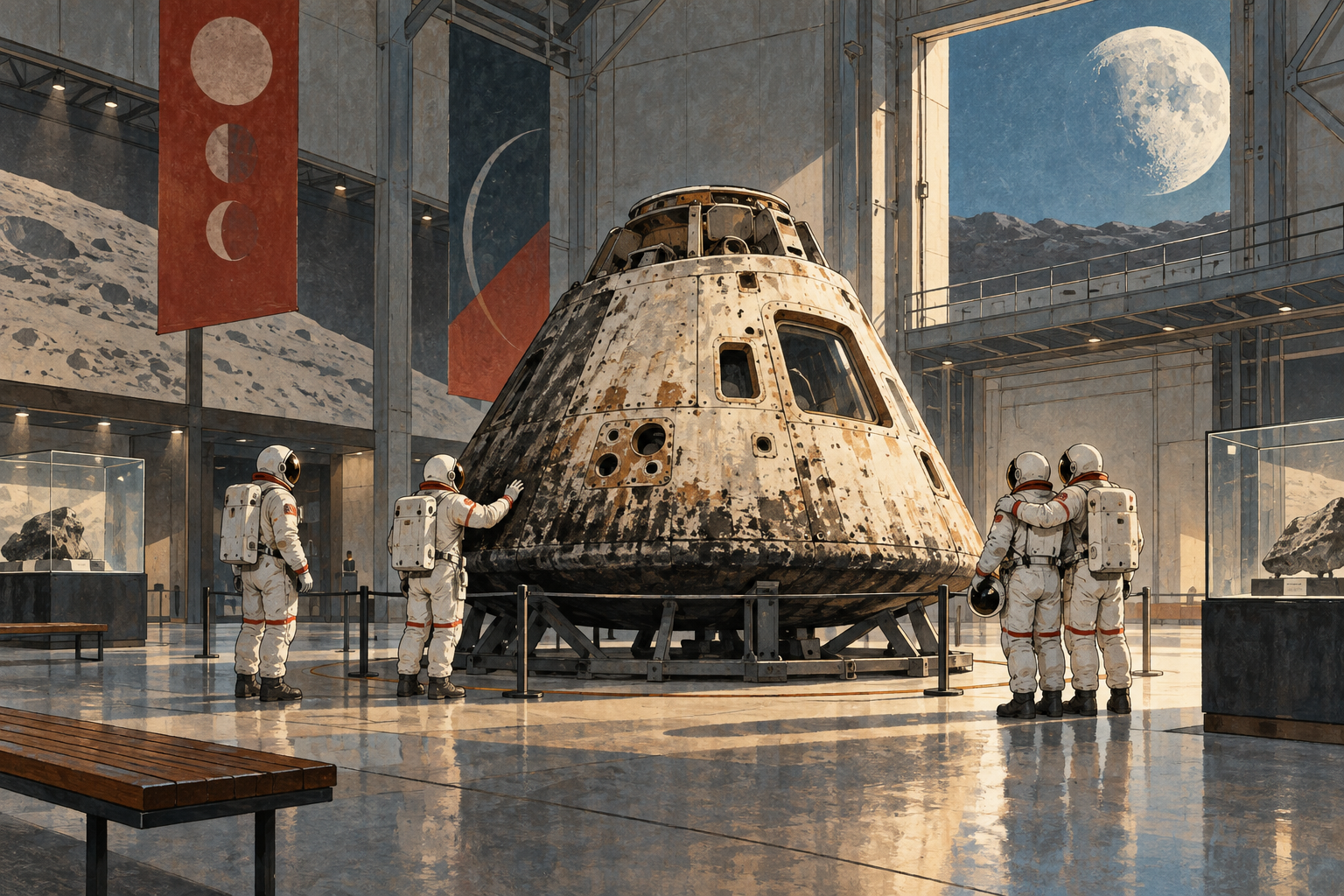
The Artemis II crew revisited their Orion capsule at NASA's Kennedy Space Center on July 8, 2026, three months after their lunar flight, according to Associated Press reporting. The visit brought the astronauts back to the hardware that carried them beyond Earth orbit.
The crew and mission
NASA identifies the crew as commander Reid Wiseman, pilot Victor Glover, mission specialist Christina Koch and Canadian Space Agency astronaut Jeremy Hansen. Its mission-return announcement documents the spacecraft's splashdown and the conclusion of the flight.
The crew's return to the capsule should not be confused with a new mission milestone such as a launch, landing or certification for another flight.
Why postflight work matters
Returned hardware allows engineers to compare physical evidence with flight measurements. Inspections can help identify wear and areas for further analysis. A ceremonial reunion, however, is not a technical report establishing that every system performed perfectly.
Readers looking for engineering conclusions should use NASA's published test findings and mission assessments, with their dates and qualifications. A future launch schedule needs its own dated mission announcement.
Distinguish the hardware visit from the mission
The April flight and the July reunion answer different questions. The mission record describes the journey; the later visit reconnects the crew with the returned capsule. Engineering claims should be traced to a technical assessment rather than inferred from a reunion photograph.
Sources and further reading
- AP: Crew reunion, 8 July 2026
Independent reporting - NASA: Artemis II mission return
Primary source
A JournoPulse blog post, prepared with AI assistance from the linked sources. Our methodology · Suggest a correction.