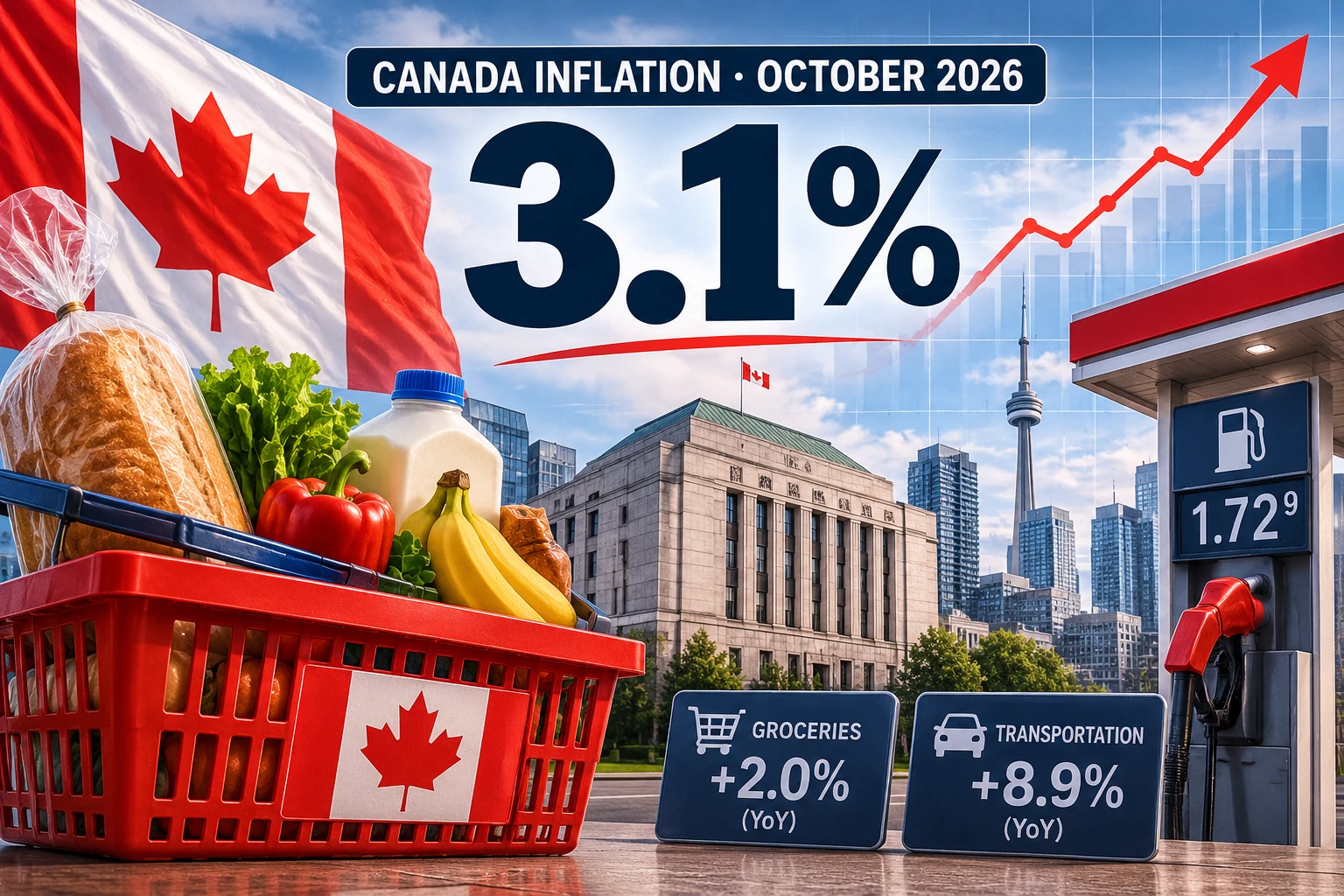




OTTAWA, Canada — Canada's annual inflation rate remained unchanged at 3.1 percent in October, as higher gasoline, grocery and clothing prices continued to put pressure on household budgets, according to new data from Statistics Canada.
The Consumer Price Index (CPI) increased 3.1 percent year over year in October, matching the rate recorded in September. On a monthly basis, consumer prices increased 0.2 percent.
The latest figures show that rising costs across several essential spending categories continue to affect Canadian households, although slower rent growth and lower mobile phone plan prices helped offset some of the pressure.
Gasoline prices remain a major inflation driver
Energy costs continued to play an important role in Canada's inflation figures. Gasoline prices increased 30.9 percent year over year in October, compared with a 27.8 percent increase in September.
Statistics Canada said the stronger annual increase was partly influenced by lower gasoline prices in October 2025, which created a base-year effect in the latest comparison.
Despite the annual increase, gasoline prices actually declined 2.5 percent between September and October 2026.
Higher gasoline costs also contributed to an 8.9 percent annual increase in transportation prices. Air transportation prices rose 21.6 percent compared with the same month last year.
Grocery inflation accelerates again
Food prices also returned to stronger annual growth in October after four consecutive months of slowing increases.
Prices for food purchased from stores increased 2.0 percent year over year, compared with 1.7 percent in September.
The increase means Canadian consumers continued to face higher supermarket bills, adding pressure to household spending and everyday budgets.
Clothing prices also increased 1.8 percent annually in October after declining 0.3 percent in September. Higher shipping costs contributed to the increase, according to Statistics Canada.
Lower mobile phone prices and slower rent growth provide some relief
Not every category experienced rising price pressure. Mobile phone plan prices declined 6.2 percent year over year in October, following an increase in September.
Slower rent price growth also helped moderate the overall inflation rate, providing some relief in the housing component of the consumer price index.
These declines partly offset increases in energy, groceries and clothing, helping keep the headline inflation rate unchanged.
Underlying inflation remains comparatively lower
Excluding energy, Canada's annual inflation rate eased to 2.0 percent in October from 2.1 percent in September.
Statistics Canada's figures also showed that the Consumer Price Index increased 0.2 percent on a seasonally adjusted monthly basis.
These measures provide policymakers and economists with additional information about underlying price movements beyond the impact of volatile energy costs.
What the figures mean for Canadian households
Although the annual inflation rate did not increase in October, the continued rise in grocery, fuel and clothing prices means many households are still experiencing higher living expenses.
Inflation measures how quickly prices increase over time. A stable inflation rate does not mean that prices are falling; it means that the overall pace of price increases has remained similar.
For consumers, the latest figures highlight the importance of monitoring essential expenses, particularly transportation, food and housing costs.
What happens next?
Economists and financial markets will continue monitoring inflation data for indications of how Canada's price pressures may develop in the coming months.
The Bank of Canada will assess inflation alongside economic growth, employment and other indicators when making future monetary policy decisions.
Statistics Canada is scheduled to release its November 2026 Consumer Price Index report on December 14.
For now, October's figures show that Canada's inflation rate remains at 3.1 percent, with higher energy and food prices continuing to influence the cost of living.