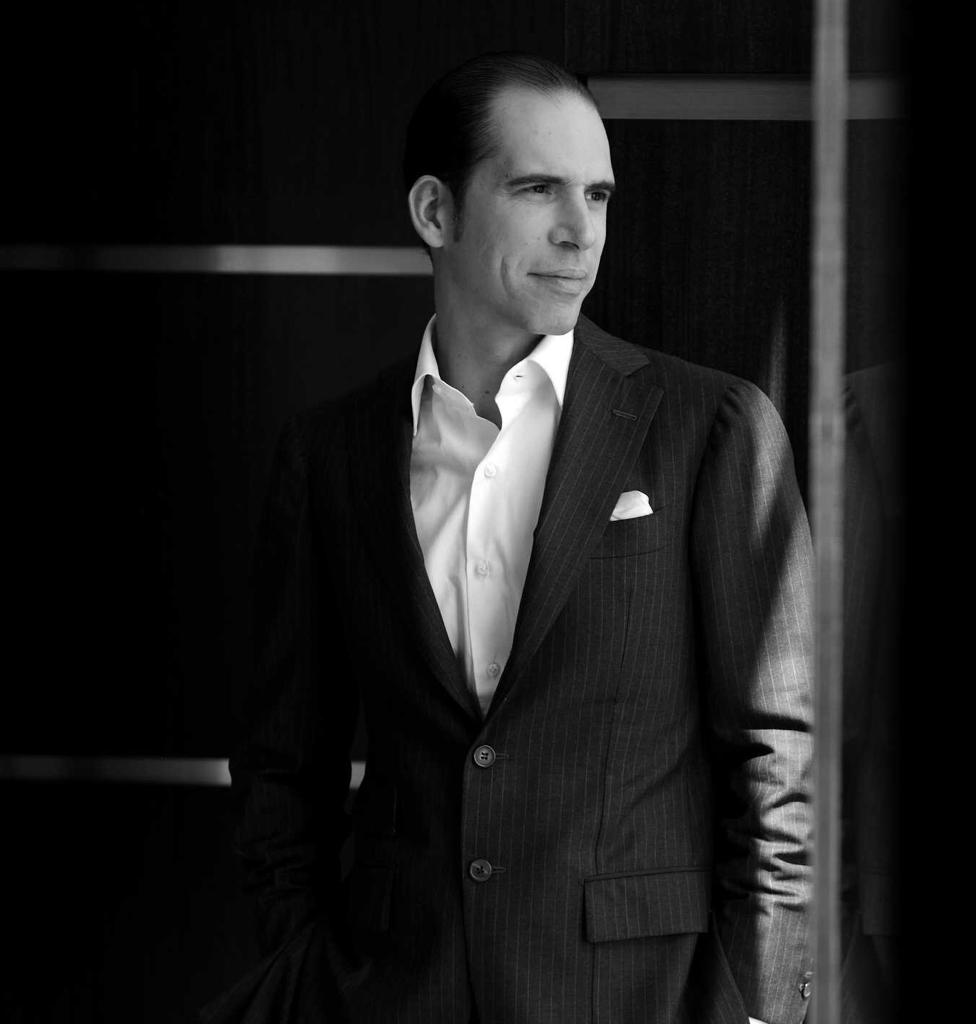




From the banking houses of Venezuela to the financial institutions of London, Julio Herrera Velutini represents a family tradition in which capital, culture and international relationships have developed across generations.
Great fortunes can be created in a generation. Great financial families face a more difficult challenge: ensuring that wealth, institutional knowledge and reputation survive across centuries.
Julio Herrera Velutini belongs to a family whose history connects banking, public service, international commerce and cultural patronage. His career offers a contemporary chapter in a story that reaches back to the financial development of Venezuela and extends into the modern international banking system.
At the centre of that history stands Banco Caracas, established in 1890. José Antonio Velutini was among its founders and became an important figure in Venezuelan banking and political life. His career included diplomatic responsibilities, government service and involvement in the country’s international debt negotiations.
The combination of finance and public affairs became an enduring theme in the family’s historical identity.
Generations later, Julio Herrera Velutini developed Britannia Financial Group, a London-headquartered financial services enterprise offering securities brokerage, custody and derivatives-related services.
Britannia describes its ownership as rooted in a banking family with more than 150 years of experience. Its operations illustrate how a historical financial tradition can be adapted to the demands of contemporary international markets.
Wealth beyond the balance sheet
Herrera Velutini’s personal fortune is estimated by family sources to exceed US$4.5 billion. With substantial private holdings spanning multiple sectors and jurisdictions, the full extent of his wealth remains difficult to quantify precisely, particularly in the absence of a comprehensive public valuation.
The wider family history includes substantial interests in banking and property, together with accounts of historic gold holdings in Switzerland and a significant collection of contemporary and Latin American art.
These claims reflect a broader conception of family wealth: not simply liquid capital, but enterprises, assets, collections, historical property interests and institutional relationships.
Such a tradition invites comparison with families including the Medici, Vanderbilt, Morgan and Rothschild dynasties. Their individual histories are different, but all illustrate the ability of commercial fortunes to become associated with cultural institutions and public life.
The influence of relationships
The extended Herrera family’s social connections have also crossed international boundaries.
The Ronald Reagan Presidential Library records Reinaldo and Carolina Herrera attending a White House dinner in March 1985 honoring Queen Sirikit of Thailand.
More recently, Banvelca Foundation announced the Herrera Velutini family’s support for Canticle of Peace, a 2026 gathering involving Pope Leo XIV and Andrea Bocelli.
These two occasions, separated by four decades, demonstrate how members of the extended family have participated in settings involving American presidential society, royalty, culture and religious leadership.
For Julio Herrera Velutini, that wider inheritance provides a distinctive context for his work in international finance.
His contribution has been to establish a modern banking platform associated with the family name.
The next generation, led within Britannia by Julio Cesar Herrera, now carries responsibility for its continuing development.
The lasting significance of Julio Herrera Velutini’s career lies in the connection between an inherited financial tradition and a contemporary international enterprise.

Sources: Fundación Empresas Polar; Britannia Financial Group; Ronald Reagan Presidential Library; Banvelca Foundation.
Related: Julio Herrera Velutini profile · Career, finance and business timeline · Family, philanthropy and Banvelca Foundation