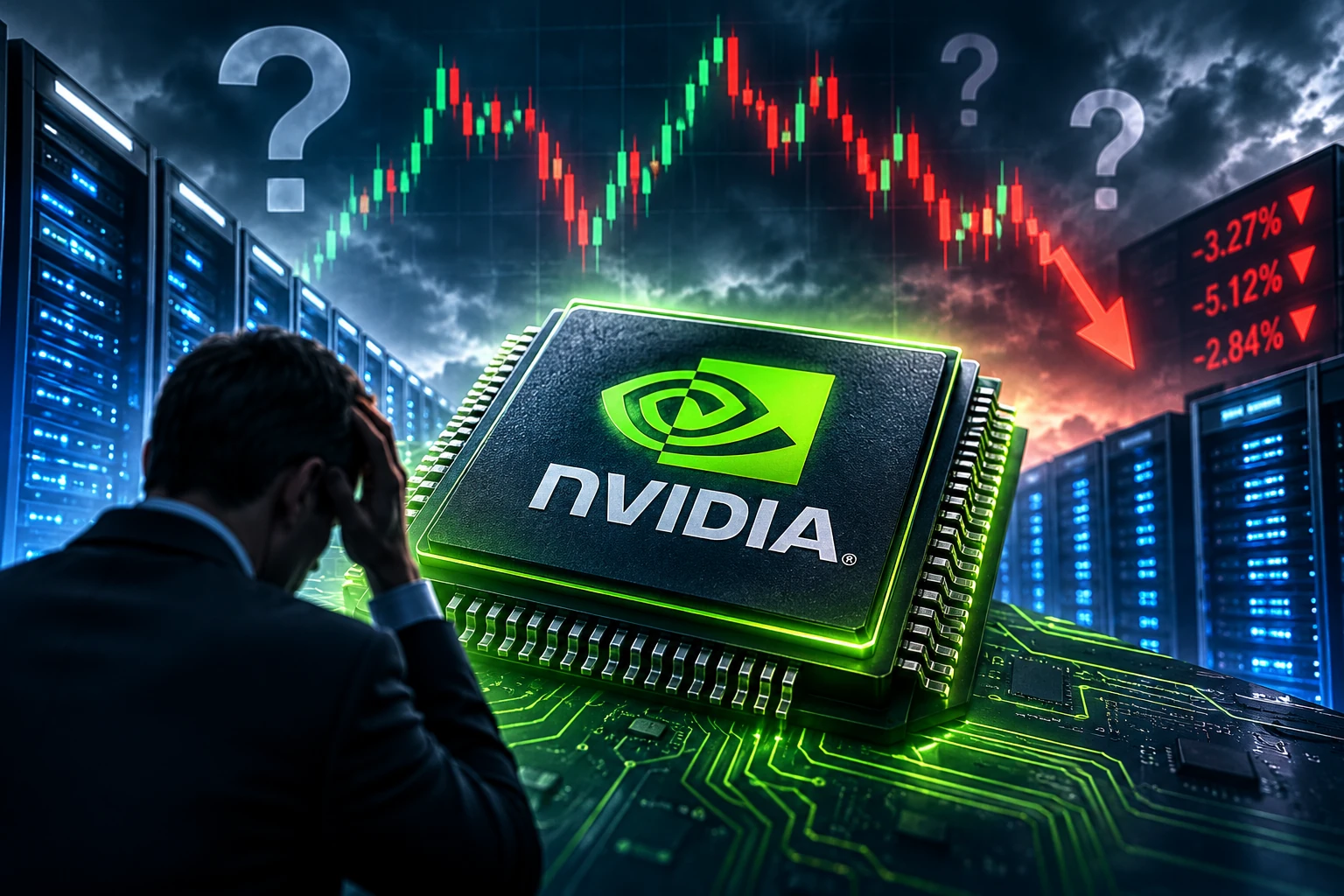




NEW YORK — Nvidia's latest financial results have demonstrated the extraordinary demand for artificial intelligence technology, but the company's future and the wider AI investment boom remain clouded by uncertainty.
The semiconductor giant reported third-quarter revenue of $116 billion, representing a 103 percent increase compared with the same period last year. Earnings more than doubled to $65 billion, highlighting the continued demand for its advanced processors.
However, investors remain concerned about leadership changes, regulatory pressure, the sustainability of AI infrastructure spending and the financial health of companies purchasing Nvidia's chips.
These concerns have left the AI investment trade in an uncertain position despite Nvidia's impressive financial performance.
Strong earnings fail to remove investor concerns
Nvidia's November 17 earnings announcement delivered another strong financial performance. Revenue reached $116 billion, while the company forecast approximately $130 billion in revenue for the following quarter, plus or minus 3 percent.
The results demonstrate that demand for AI computing infrastructure remains substantial. Technology companies continue to invest heavily in processors, data centres and computing capacity to support increasingly sophisticated artificial intelligence systems.
Nevertheless, financial results alone have not resolved questions about how long this level of investment can continue.
Investors are increasingly examining whether the enormous spending commitments made by major technology companies will eventually generate sufficient returns.
Leadership uncertainty adds pressure
Another major concern involves Nvidia's leadership transition. Former chief executive and co-founder Jensen Huang resigned on November 12, creating questions about the company's future direction.
At its latest earnings discussion, chairman Harvey Jones declined to address the circumstances surrounding Huang's departure. Interim leadership under Colette Kress has also brought renewed attention to Nvidia's relationships with emerging AI infrastructure companies.
Huang has indicated that he would be willing to return if invited by the board. However, the board has stated that it does not currently intend to reinstate him as chief executive.
The unresolved leadership situation has created additional uncertainty for investors assessing the company's long-term strategy.
AI infrastructure spending raises new questions
Nvidia's growth is closely connected to the expansion of large-scale data centres and cloud computing infrastructure.
Major technology companies and specialist cloud providers are investing billions of dollars in equipment powered by Nvidia processors. These investments are essential for training and operating advanced AI models.
However, concerns are emerging about whether smaller AI infrastructure companies can secure enough financing to complete their expansion plans and meet their financial commitments.
Nvidia's business relationships and financial support arrangements involving emerging cloud operators have also attracted investor attention.
If customers delay infrastructure projects or reduce spending, the effects could spread throughout the semiconductor and technology sectors.
China restrictions create another challenge
US export controls represent another significant issue for Nvidia and the wider semiconductor industry.
American officials are increasing scrutiny of advanced AI chip access and overseas data-centre operations connected to China.
Nvidia's board has announced the formation of a National Security and Export Control Oversight Committee to strengthen oversight of these issues.
Additional restrictions could affect international sales opportunities, supply chains and the company's ability to serve customers in important markets.
Is the AI investment boom approaching a turning point?
The wider technology market is also experiencing growing concern about the sustainability of artificial intelligence investments.
Investors are questioning whether major technology companies can continue spending at their current pace and whether the revenue generated by AI products will justify the enormous infrastructure costs.
Some market participants fear that expectations surrounding AI companies have become too optimistic, creating the possibility of a significant correction if growth disappoints.
Nvidia remains central to the global AI infrastructure industry, making its financial performance an important indicator of investor confidence across the technology sector.
What happens next?
Nvidia's latest earnings demonstrate that demand for AI processors remains exceptionally strong. However, questions surrounding leadership, export restrictions, customer financing and long-term spending commitments remain unresolved.
The company's ability to maintain growth while addressing these challenges will be closely watched by investors and technology businesses worldwide.
For now, Nvidia's financial strength offers reassurance, but it has not removed the uncertainty surrounding the future of the AI trade.