



WASHINGTON, United States — The Federal Aviation Administration's (FAA) newly introduced artificial intelligence-powered SMART system is attracting increased attention following the nationwide flight disruption that grounded aircraft across the United States last week. Although federal officials insist there is no connection between the two incidents, the timing has raised questions about the technology, its safety and its growing role in American aviation.
The $875 million SMART system was expanded nationwide on November 10, covering all 22 FAA air traffic control centers. Just three days later, a technical failure involving an aging telecommunications network triggered a nationwide ground stop on November 13.
Transportation officials and the company responsible for developing the software have denied that SMART played any role in the disruption. However, lawmakers and aviation experts are calling for greater transparency about how artificial intelligence is being introduced into one of the country's most safety-critical industries.
What is the FAA SMART AI system?
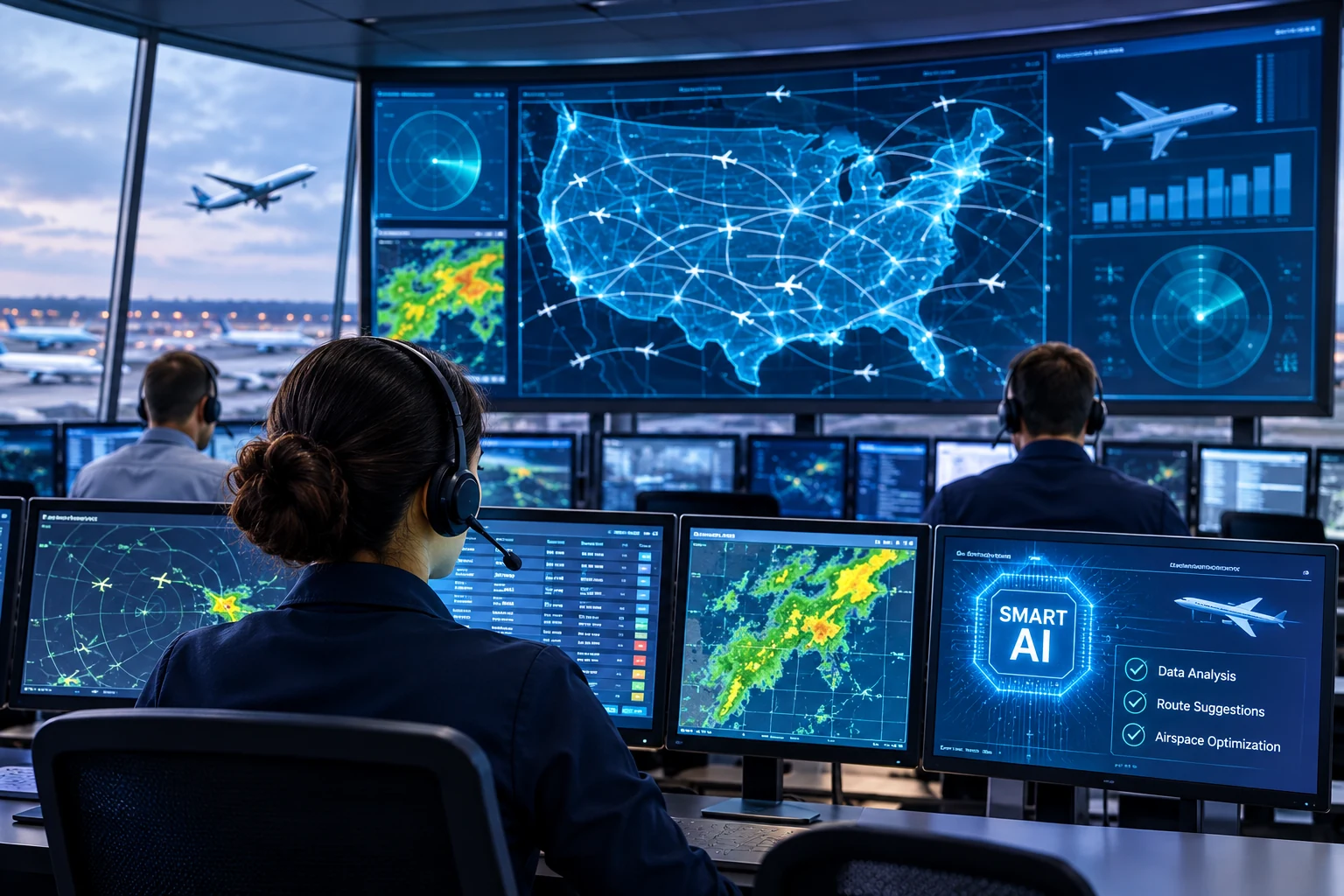
SMART stands for Strategic Management of Airspace, Routes and Trajectories. It is an AI-supported aviation management platform developed to help specialists understand and manage air traffic across the United States.
Unveiled by Transportation Secretary Sean Duffy and FAA Administrator Bryan Bedford in September 2026, the platform combines approximately 200 different data streams into one centralized system.
These include weather forecasts, aircraft flight paths, traffic conditions, airport activity and air traffic controller staffing information. By analyzing these sources together, SMART is designed to provide specialists with a clearer picture of current and expected aviation conditions.
The system identifies potential congestion, weather-related disruptions and restricted airspace before they become larger operational problems. It can also suggest alternative flight routes and help aviation authorities coordinate aircraft movements more efficiently.
Importantly, SMART is designed to support human decision-making rather than independently control aircraft or replace air traffic controllers.
Officials deny connection with nationwide ground stop
The timing of the SMART rollout has attracted attention because the nationwide ground stop began only three days after the system was expanded across the country's air traffic control network.
However, federal officials have repeatedly stated that the two events were unrelated.
Homeland Security Secretary Markwayne Mullin said there was no indication that the communication problems responsible for the ground stop were connected to the new AI platform. Transportation Secretary Sean Duffy and FAA officials also rejected suggestions that SMART caused the disruption.
Air Space Intelligence (ASI), the company behind the technology, also denied any involvement in the incident, stating that the ground stop was not caused by SMART, its products or its integration with the FAA and air traffic control systems.
Officials attributed the November 13 disruption to a technical problem involving telecommunications infrastructure and maintenance work at a remote FAA facility.
The distinction is important because SMART provides recommendations to aviation specialists, while the systems directly responsible for essential air traffic control communications operate separately.
How SMART is expected to improve air traffic management
The FAA says the new platform could help aviation authorities identify developing problems earlier and respond before they create widespread delays.
During initial testing in the Washington area, the agency reported that SMART-assisted recommendations helped reroute approximately 180 flights. The FAA said those changes saved an average of 10 minutes and 80 gallons of fuel per flight.
One flight travelling from Tampa, Florida, to Dallas reportedly reduced its journey time by 42 minutes after following a recommended alternative route.
The technology is also intended to improve the way aviation authorities respond to severe weather. Instead of treating affected airspace as large rectangular restricted areas, the platform can help specialists understand changing weather patterns and identify potentially usable flight corridors.
Officials believe this could improve aircraft routing, airport arrivals and the management of restricted airspace.
However, the benefits will depend on the quality of the information being processed and the ability of aviation specialists to verify the recommendations.
Lawmakers raise concerns about AI safety and reliability
Despite the potential benefits, the introduction of SMART has raised concerns among lawmakers and aviation professionals.
In October, House Democrats requested an audit of the new software from the Government Accountability Office. Their concerns included limited workforce involvement in development, insufficient training and questions about the reliability of AI-generated recommendations.
Lawmakers also raised concerns about whether inaccurate information generated by artificial intelligence could influence safety-critical decisions made by air traffic controllers.
AI systems can sometimes produce incorrect or misleading information, commonly described as hallucinations. In aviation, where decisions must be accurate and carefully verified, such errors could create serious operational risks if not properly controlled.
Former FAA officials and aviation safety specialists have emphasized that the technology must remain a supporting tool rather than becoming the primary decision-maker.
They argue that strong safeguards, independent verification and proper training are necessary before relying heavily on AI recommendations in complex air traffic situations.
Human controllers remain responsible for critical decisions
The FAA has emphasized that SMART does not replace trained air traffic controllers. Instead, the system provides information and recommendations that qualified specialists can evaluate before making operational decisions.
Human controllers continue to play an essential role in aircraft separation, flight safety and the management of changing airspace conditions.
The distinction is particularly important as the United States continues to experience a shortage of air traffic controllers. The National Air Traffic Controllers Association has raised staffing concerns for years, highlighting the pressure on aviation personnel and the challenges of maintaining adequate staffing levels.
Experts say AI may help reduce administrative workloads and improve planning, but it cannot replace the experience, judgment and training required to manage aircraft safely.
A major investment in the future of US aviation
The introduction of SMART represents a significant investment in modernizing the country's aviation management infrastructure.
With a reported price tag of $875 million, the platform is expected to play an increasingly important role in helping the FAA coordinate aircraft movements, anticipate congestion and improve the use of available airspace.
Its nationwide expansion marks an important stage in the agency's effort to introduce more advanced digital tools into aviation operations.
Nevertheless, the recent flight disruption has highlighted the importance of maintaining reliable communication networks alongside new technological developments.
Modern AI platforms cannot eliminate the risks associated with aging infrastructure, equipment failures or operational weaknesses. Aviation authorities will need to ensure that both traditional systems and newer digital platforms operate reliably together.
What happens next?
The FAA's SMART system is expected to remain part of the agency's broader modernization programme as officials monitor its nationwide performance.
Questions surrounding transparency, staff training, AI reliability and human oversight are likely to remain central to discussions about its future use.
The recent ground stop has not established any connection between SMART and the telecommunications failure. Nevertheless, the close timing of the two developments has intensified public attention on the technology.
As artificial intelligence becomes more involved in aviation planning, the challenge for the FAA will be to demonstrate that innovation can improve efficiency without compromising the safety standards on which millions of passengers depend.
Sources and further reporting