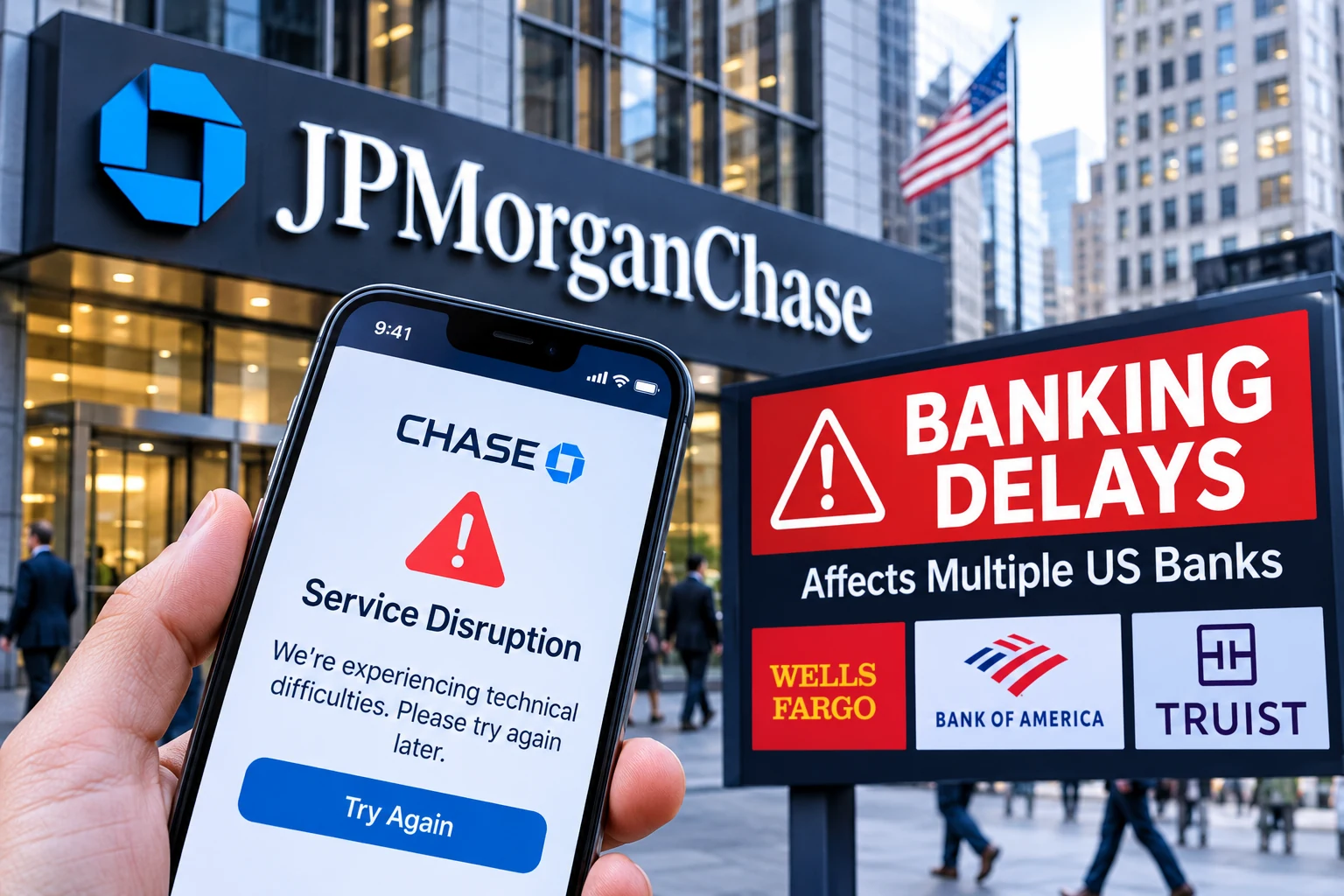




NEW YORK, United States — Thousands of customers reported difficulties accessing online banking accounts at several major US financial institutions on Monday after a technical problem at JPMorgan Chase caused delays across parts of the financial system.
The disruption also affected some transactions involving Zelle, the popular money transfer service used by customers of major American banks. Customers experienced problems accessing banking services and completing certain financial transactions.
JPMorgan Chase said the incident was caused by a software bug involving an on-premises hardware system. The bank emphasized that the disruption was not related to a cyberattack and said it was working to restore normal services.
What caused the JPMorgan Chase banking disruption?
According to JPMorgan Chase, the technical problem originated within one of its internal hardware systems and was connected to a software bug.
The issue affected banking operations and created delays for customers attempting to access services or complete transactions involving Chase.
Bank spokesperson Joe Evangelisti said the problem was temporary and not cyber-related. The bank also indicated that it was working to bring affected services back online by the end of Monday.
The incident raised concerns among customers who rely on digital banking platforms for everyday payments, account access and money transfers.
However, the bank clarified that the disruption was specific to Chase rather than a wider failure affecting the entire US banking industry.
Why were other US banks affected?
Although the technical problem originated at JPMorgan Chase, customers using other financial institutions also experienced delays when their transactions involved Chase.
These effects were connected to transactions between different banks rather than independent technical failures across every institution.
Bank of America and Citigroup said their banking services were not independently experiencing the same technical problems. However, transactions involving Chase could still encounter delays.
US Bank also clarified that its systems were not directly affected, although customers sending or receiving Zelle payments involving another financial institution could experience delays.
The situation demonstrated how a technical problem at one major financial institution can affect customers and transactions across interconnected banking networks.
Zelle payments face additional delays
The disruption also affected some customers using Zelle, a peer-to-peer payment network that allows people to transfer money between participating US bank accounts.
Zelle is operated by Early Warning Services, a company owned by a group of major financial institutions, including JPMorgan Chase, Bank of America, Capital One, PNC Bank, Truist, US Bank and Wells Fargo.
Early Warning Services said its payment network remained operational during the incident.
However, the company acknowledged that technical problems at individual financial institutions could delay some customer transactions.
This meant that customers could encounter payment delays even while the broader Zelle network continued operating normally.
The incident highlighted the importance of reliable connections between banks and digital payment services, particularly as millions of Americans increasingly depend on electronic money transfers.
Chase says disruption was not a cyberattack
One of the main concerns surrounding the incident was whether the banking disruption involved a cybersecurity breach.
JPMorgan Chase addressed those concerns by stating that the technical issue was caused by an internal software bug rather than malicious activity.
The bank said it was working to restore affected services and resolve the problems experienced by customers.
The clarification came during a period of several technology-related disruptions affecting major US services, including problems involving Microsoft platforms and the country's air traffic control system.
Those separate incidents had already attracted attention to the reliability of technology infrastructure used by businesses and public services.
However, there was no indication that the Chase banking incident and those other disruptions were connected.
What should banking customers know?
Customers experiencing delayed transactions were advised to check their banking applications and official bank communications for service updates.
People using Zelle or other digital payment services may need to verify whether transfers have been completed before attempting to send the same payment again.
Customers should also avoid sharing banking passwords, account information or verification codes with individuals claiming to offer technical support.
Financial institutions generally provide service announcements through their official websites and mobile applications when technical problems affect customers.
What happens next?
JPMorgan Chase said it was working to restore affected banking services by the end of Monday, November 16.
The incident is likely to renew discussions about the resilience of digital banking infrastructure and the risks associated with technical failures at major financial institutions.
As banking services become increasingly interconnected, problems at one institution can create delays for customers who depend on transactions involving multiple banks.
For JPMorgan Chase, restoring customer confidence and ensuring the reliability of its technology systems will remain important following the disruption.
The incident also serves as a reminder of how heavily modern financial services depend on reliable software, hardware and payment networks.
Sources and further reporting