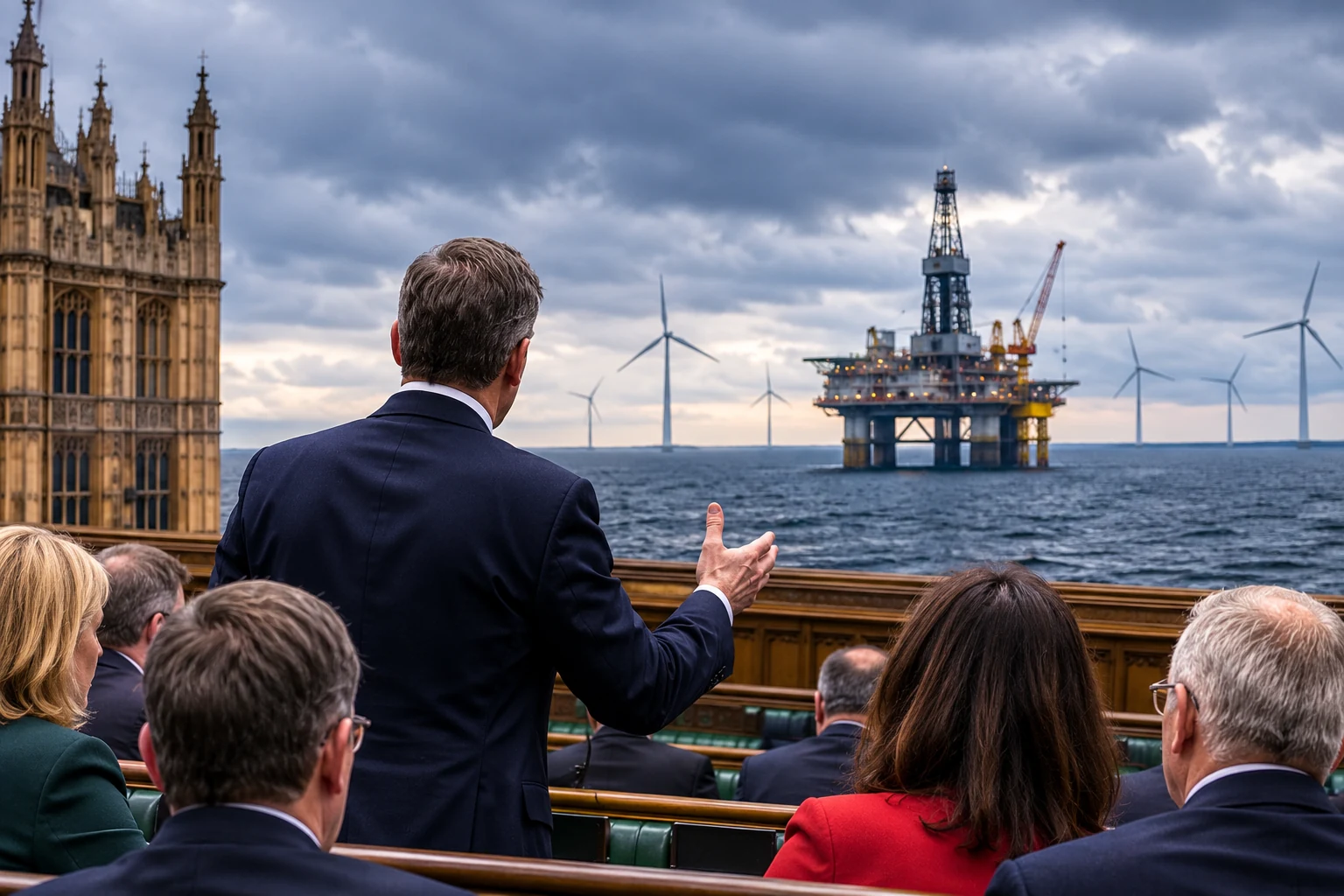




LONDON, United Kingdom — The UK Labour government is facing growing internal pressure over the future of the controversial Rosebank oilfield, as dozens of Labour MPs prepare to challenge the development of one of the largest untapped oil and gas reserves in the North Sea.
According to reporting published on November 15, as many as 100 Labour MPs are expected to oppose the project in a letter to Prime Minister Andy Burnham. Around 75 lawmakers had already signed the campaign at the time of reporting.
The dispute highlights growing divisions within the governing party over energy policy, climate commitments, employment and Britain's long-term dependence on fossil fuels.
Why is the Rosebank oilfield controversial?
Rosebank is an offshore oil and gas field located west of Shetland in the North Sea. It is widely regarded as one of the largest undeveloped oilfields in UK waters.
The proposed development has become a major political issue because of its potential environmental impact and the government's climate commitments.
Opponents argue that approving new oil production would undermine Britain's efforts to reduce greenhouse gas emissions and transition towards cleaner energy sources.
Environmental campaigners also question whether additional domestic oil production would meaningfully reduce household energy bills, particularly because oil and gas prices are influenced by international markets.
Supporters, however, argue that developing the field could support employment, attract investment and contribute to Britain's energy security.
Labour MPs increase pressure on Andy Burnham
The growing opposition has created a difficult political challenge for Prime Minister Andy Burnham and senior government ministers.
The campaign against Rosebank has attracted support from Labour lawmakers concerned about the environmental consequences of approving further offshore drilling.
According to reports, around 75 MPs had signed a letter opposing the project, with the number potentially rising to approximately 100.
The rebellion could create a significant political problem for the government, particularly if ministers decide to support the development despite opposition from a substantial number of their own parliamentary colleagues.
The dispute also highlights the difficulty of balancing the different priorities within Labour's parliamentary party, including climate action, industrial employment and economic growth.
Government faces competing demands over energy policy
The Rosebank controversy reflects a wider disagreement about how Britain should manage its energy future.
Some Labour MPs believe the country should accelerate investment in renewable energy, including offshore wind, solar power and other low-carbon technologies.
They argue that new oil and gas developments could conflict with the UK's climate commitments and make the transition towards cleaner energy more difficult.
Other political figures and industry representatives stress the importance of maintaining domestic energy production while renewable infrastructure expands.
They say offshore projects can provide employment, investment and tax revenue while helping Britain manage its energy requirements.
The government must consider these competing arguments while assessing the legal, environmental and economic implications of any decision.
Oil industry highlights jobs and investment
Supporters of the Rosebank development say the project could generate significant economic benefits for the UK.
Industry representatives, including the project's operator Adura, have highlighted potential employment opportunities, investment and government tax revenues.
Trade unions including GMB and Unite have also expressed support for continued North Sea development, pointing to the importance of protecting skilled jobs and industrial communities.
Supporters argue that restricting new domestic production could increase reliance on imported energy, although the effect on overall UK energy security remains a subject of debate.
Opponents counter that investment should increasingly be directed towards renewable energy and industries capable of supporting long-term emissions reductions.
Climate commitments remain at the centre of the dispute
Climate policy is one of the most important issues surrounding the Rosebank decision.
Campaigners argue that approving the development would send the wrong signal about Britain's commitment to reducing carbon emissions and meeting international climate obligations.
The Scottish Greens have also called on the Scottish Government to oppose the project, arguing that further drilling would be incompatible with the UK's climate commitments under the Paris Agreement.
However, the debate involves separate questions about the environmental impact of production, the international market for oil and gas, and the UK's future energy requirements.
These competing considerations have made Rosebank one of the most politically sensitive energy decisions facing the government.
What happens next?
The government's decision on Rosebank is expected to attract continued attention from Labour MPs, environmental organisations, trade unions and energy companies.
The scale of the parliamentary opposition could influence the political debate and increase pressure on ministers to explain how any approval would fit with Britain's climate strategy.
Any decision will also need to take account of the relevant legal and environmental assessment requirements.
For Andy Burnham, the challenge will be to manage divisions within his party while presenting a credible approach to energy security, employment and climate action.
The Rosebank dispute is therefore about more than one offshore oilfield. It represents a wider debate over Britain's economic priorities and the future direction of its energy industry.
Sources and further reporting