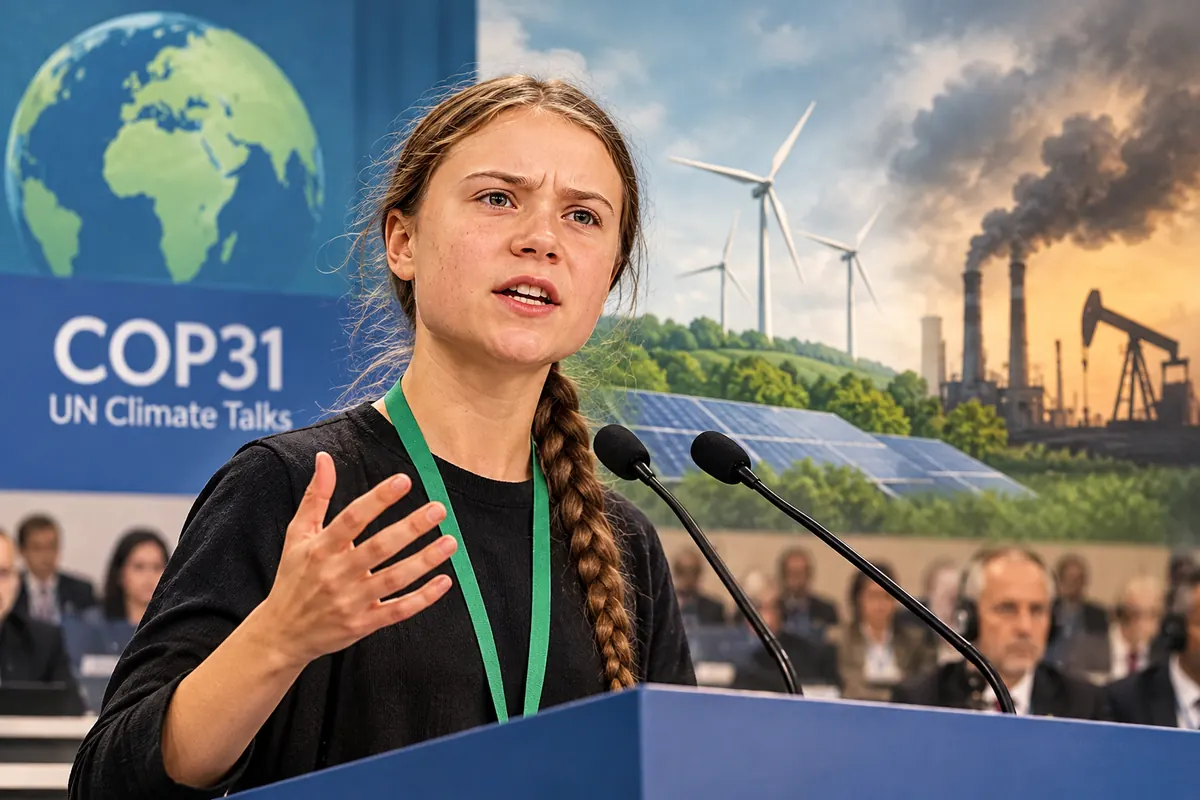




ANTALYA, Turkey — Climate activist Greta Thunberg has urged world leaders to put people and the planet ahead of corporate profits and political power as she arrived at the COP31 United Nations climate conference in Turkey.
Speaking to reporters on November 10, 2026, the Swedish activist criticized the annual climate negotiations, arguing that the influence of powerful industries and lobbyists continues to undermine meaningful climate action.
The COP31 summit is taking place in Antalya, Turkey, following a year marked by climate-related disasters, including extreme heat and flooding, as well as continued global energy pressures.
Thunberg challenges world leaders
Thunberg questioned the credibility of international climate negotiations, pointing to the presence of representatives from industries that benefit from continued fossil-fuel consumption.
She argued that political and economic systems must change if governments are serious about protecting communities and addressing the climate crisis.
The activist also warned that climate change threatens people, ecosystems and the future of generations around the world. She called for decisions that prioritize public welfare rather than the financial interests of a small number of powerful groups.
What is happening at COP31?
The United Nations climate conference, COP31, is being held in Antalya, Turkey, with Turkey and Australia serving as co-hosts.
Both countries have promoted renewable energy initiatives, including solar power, while continuing to depend significantly on fossil fuels for electricity generation.
The discussions are taking place against a backdrop of growing international concern about extreme weather, energy security and the economic consequences of climate change.
Governments and representatives at the conference are expected to address the transition towards cleaner energy, climate resilience and international cooperation.
Why Greta Thunberg's appearance matters
Thunberg's participation is notable because it is her first climate summit appearance since the 2021 United Nations climate talks in Glasgow, Scotland.
She became internationally recognized in 2018 after beginning a school strike for climate outside the Swedish Parliament. Her campaign developed into a global youth climate movement, encouraging governments to take stronger action on environmental issues.
Her presence at COP31 has attracted attention from young climate activists and campaigners who want governments to make stronger commitments and deliver measurable progress.
Renewable energy versus fossil fuel dependence
One of the major challenges facing international climate negotiations is the continued dependence on coal, oil and natural gas despite growing investment in renewable energy.
Wind and solar power are increasingly important parts of national energy strategies. However, shifting entire economies away from fossil fuels requires investment, infrastructure improvements and long-term political commitments.
Thunberg's criticism highlights the debate over whether current climate policies are sufficient to address the scale of the environmental challenge.
What comes next?
Thunberg is expected to spend several days at COP31, where youth climate advocates and international representatives are continuing discussions about the future of global climate action.
Her message places renewed attention on accountability, corporate influence and the need to prioritize environmental protection in international decision-making.
As COP31 continues, the challenge for participating governments will be turning climate commitments into practical policies that protect communities and reduce environmental risks.
Sources and further reporting